
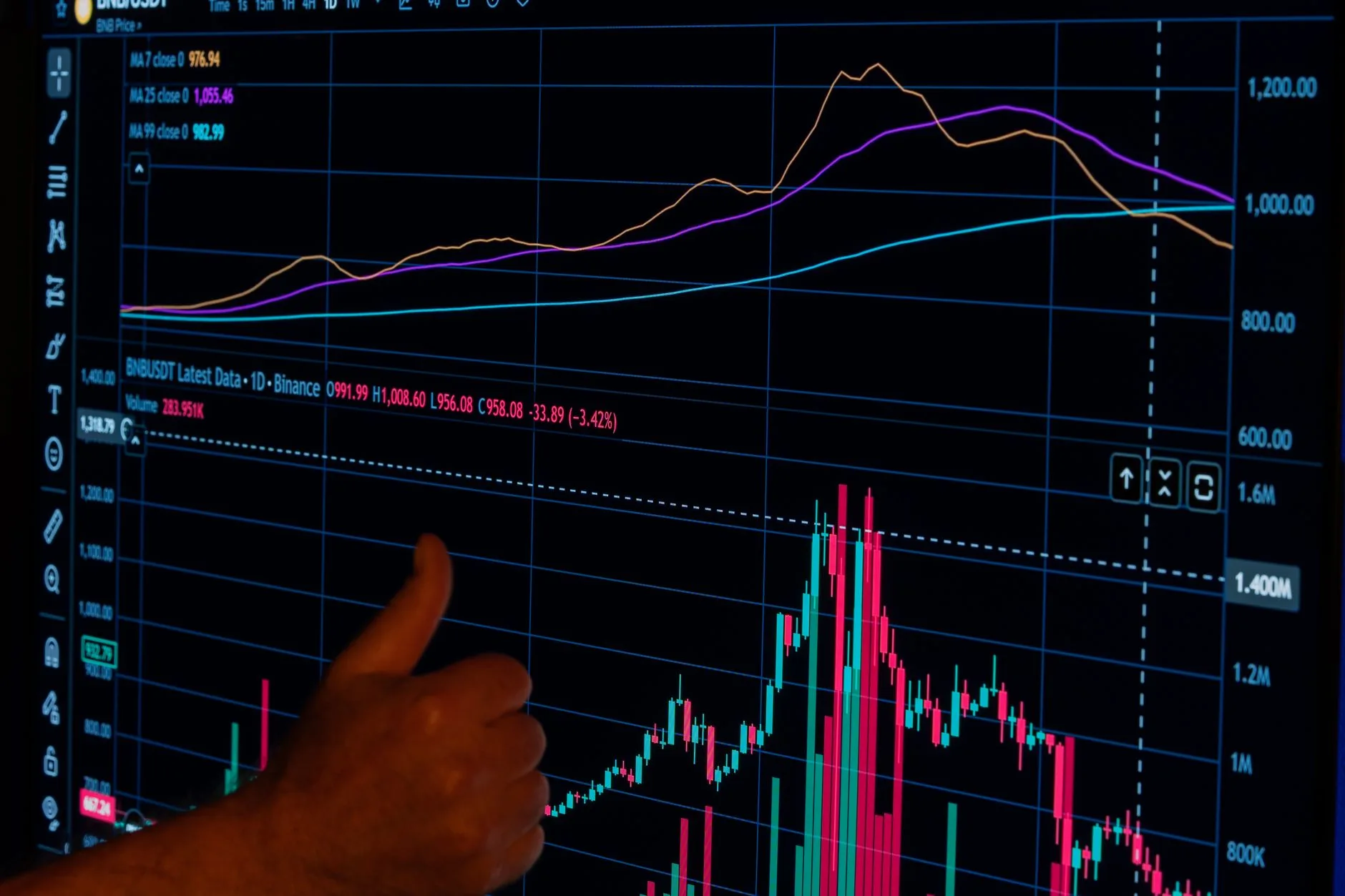
An MSCI World ETF is one of the most widely used products for savers who want exposure to international equity markets through a single line. Before selecting a specific fund, it helps to understand what the index actually tracks, what differentiates the trackers available, and which wrapper to hold them in.
What is an MSCI World ETF
The MSCI World is a stock market index that groups large and mid-cap companies from around twenty developed countries across North America, Europe and Asia-Pacific. An MSCI World ETF is a listed fund that tracks this index: by buying a share, an investor indirectly holds all the companies it contains, in the proportions set by their market capitalization.
This construction makes it a diversification product rather than a bet on a particular region or sector. The goal is not to beat the market, but to track its performance at the lowest possible cost.
Choosing an ETF over individual stocks means giving up picking one’s own holdings in exchange for exposure, in a single transaction, to a very large number of companies. The index’s composition evolves through periodic reviews carried out by MSCI, which adjusts the list of included companies and their weighting to reflect market movements, without any action required from the fund holder.
What the MSCI World index contains
The index weighting follows each company’s free-float market capitalization: the larger a company’s market value, the heavier its weight in the index. This method mechanically leads to a strong concentration in the United States, which represents the largest share of the index, well ahead of Japan, the United Kingdom or the other developed markets included.
On the sector side, technology has become a central part of the weighting, alongside healthcare and financials. This breakdown evolves with the markets: it is never fixed, and reflects at any given time the relative market weight of each company, not an active management choice.
How to read the performance of an MSCI World ETF
An MSCI World ETF tracks an international equity index, which implies phases of gains and losses tied to the markets it replicates, with no past performance guaranteeing future results. A fund’s reported performance also depends on its tracking difference with the index, generally small, and on the holder’s reference currency relative to the US dollar, the currency in which a large share of the index’s companies are valued.
Comparing two MSCI World ETFs on recent performance alone has little meaning: funds tracking the same index post very similar results over time, with differences mostly coming from fees and currency effects rather than any management choice.
A long investment horizon remains the basic condition for investing in an equity index such as the MSCI World. Equity markets go through sometimes sharp correction phases, and an investor who needs to recover their capital in the short term risks having to sell at the wrong time. Regular investment plans, by smoothing the average purchase price over several months or years, reduce this effect without eliminating it.
How to choose a good MSCI World ETF
Several ETFs track the same MSCI World index without being equivalent for that reason. The difference does not lie in the index tracked, identical everywhere, but in the characteristics specific to each product.
| Criterion | What to check | Why it matters |
|---|---|---|
| Ongoing charges | Annual level deducted from assets under management | The only element that mechanically reduces performance year after year |
| Replication method | Physical (holdings held directly) or synthetic (swap contract) | Determines counterparty risk and PEA eligibility |
| Fund size | Total assets managed by the issuer | A small fund risks closure and a forced, unplanned exit |
| Trading currency | Euro, dollar, hedged or unhedged against currency risk | Adds a source of variation independent of the index’s performance |
| Distribution policy | Accumulating or distributing | Changes the tax treatment and dividend handling depending on the wrapper |
The replication method deserves particular attention for anyone targeting a PEA: MSCI World ETFs eligible for the PEA almost always rely on synthetic replication, since the plan only accepts European securities. The ETF then tracks the index through a swap contract with a banking counterparty, rather than by directly holding the shares of the companies concerned.
The distribution policy mainly affects ease of management: an accumulating ETF automatically reinvests dividends received, avoiding the need to reinvest them manually and simplifying tax tracking during the accumulation phase.
MSCI World or MSCI ACWI: what are the differences
The MSCI World is limited to developed countries. The MSCI ACWI (All Country World Index) follows the same construction but adds emerging markets, such as China, India or Brazil. The share of emerging markets in the ACWI remains clearly a minority compared with developed countries, but it exists, and this changes two things: the portfolio’s geographic diversification and its exposure to emerging-market currencies.
A saver looking for exposure strictly limited to developed economies will turn to the MSCI World. Someone who prefers broader coverage of global equity markets, emerging markets included, will look instead at the MSCI ACWI, at the cost of generally somewhat higher volatility.
Where to hold an MSCI World ETF: PEA, life insurance or a brokerage account
The choice of wrapper affects taxation as much as the choice of product itself. A standard brokerage account accepts any MSCI World ETF without restriction, but without any particular tax benefit: capital gains and dividends follow the standard tax treatment for securities.
The PEA only accepts ETFs meeting European eligibility criteria, which explains the frequent use of synthetic replication for MSCI World trackers offered within this framework. In exchange, the PEA grants a favorable tax regime on capital gains after five years of holding.
Life insurance allows an MSCI World ETF to be held as a unit-linked investment, with the taxation specific to that wrapper, and the advantage of possible management alongside a euro fund within the same contract. A dedicated article covers in more detail where to hold your ETFs depending on the investment horizon and each saver’s goals.
The limits of a concentrated exposure to the MSCI World
An MSCI World ETF spreads exposure across hundreds of companies and several continents, but this diversification remains partial. The geographic concentration in the United States strongly exposes the investor to American economic and market cycles, more so than to a balanced global average. A marked slowdown across the Atlantic therefore affects the index disproportionately relative to the actual weight of the US economy in the world. To add companies absent from the stock market, the article private equity ETF or unlisted fund compares the available options.
The index also remains exclusively made up of equities: it provides no diversification toward bonds, real estate or other asset classes that react differently during periods of stress on equity markets. To place an MSCI World ETF within a broader allocation, the guide on diversifying asset classes details how to combine stocks, bonds and other vehicles according to the desired risk profile.
Frequently asked questions
What is an MSCI World ETF?
An MSCI World ETF is an exchange-traded fund that tracks the MSCI World index, which groups large and mid-cap companies from around twenty developed countries. By buying a single share, an investor gains diversified exposure to all these markets, weighted by each company’s market capitalization.
How do you choose a good MSCI World ETF?
Issuers offer products that track the same index but differ on several points: ongoing charges, the replication method (physical or synthetic), the size of assets under management, the trading currency, and the distribution policy, accumulating or distributing. Comparing these criteria matters more than the choice of issuer itself, since the performance tracked remains identical from one fund to another.
How do you invest in an MSCI World ETF?
Purchases go through a standard brokerage account, a PEA for eligible versions, or a unit-linked policy within a life insurance contract. A buy order placed with a broker or insurer is enough, often supplemented with regular investment plans to smooth the average purchase price over time.
What is the difference between an MSCI World ETF and an MSCI ACWI ETF?
The MSCI World only covers developed countries, while the MSCI ACWI adds emerging markets on top. The share of emerging markets in the ACWI remains clearly a minority compared with developed countries, but this difference changes the portfolio’s geographic diversification and its level of currency risk.
Should you hold an MSCI World ETF in a PEA, life insurance or a brokerage account?
A PEA only accepts ETFs meeting European eligibility criteria, sometimes achieved through synthetic replication. Life insurance holds the ETF as a unit-linked investment, with the taxation specific to that wrapper. A standard brokerage account accepts any ETF without restriction but without any specific tax benefit. The choice depends on the eligibility of the targeted product and the investment horizon.